CBN Data Localization Directive 2027: What Nigerian Businesses Need to Know

On 15 June 2026, the Central Bank of Nigeria issued Circular No. PSS/DIR/PUB/CIR/001/004, introducing data-localization and other requirements for Nigeria’s payments ecosystem. The circular requires payment transaction data generated within Nigeria to be stored and managed in Nigeria, with implementation expected from 1 January 2027.
The localization requirement applies across a broad range of payment-system participants, including deposit money banks, microfinance banks, mobile money operators, switching and processing companies, payment service providers, super agents, and other licensed payment operators.
For tech-driven businesses, from digital banks and payment gateways to financial SaaS providers, the CBN’s data-localization directive marks an end to default reliance on offshore public cloud regions. As the January 1, 2027 deadline approaches, technology leaders must ensure that primary transaction records, operational controls, and administrative access reside firmly within Nigerian borders.
Beyond core database hosting, the directive forces tech companies to audit their entire digital ecosystem, including cross-border APIs and offshore identity management. For CTOs and engineering leaders, this mandate is more than a compliance checkpoint; it is a strategic catalyst to eliminate technical debt, remove single points of failure, and build a resilient, low-latency sovereign architecture.
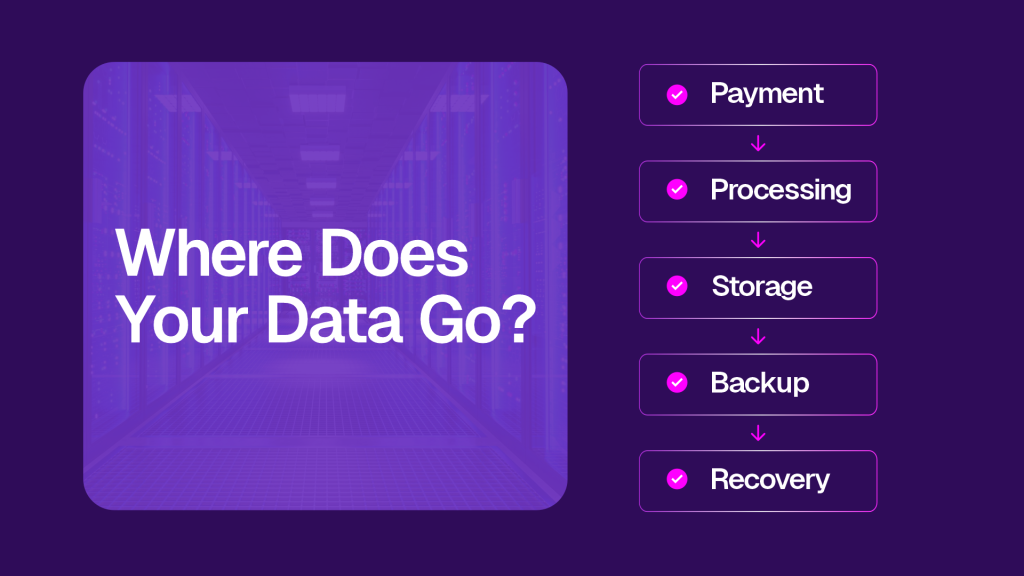
Moving a workload into a Nigerian data centre does not automatically make it compliant or operationally sustainable. Backups, logs, analytics pipelines, monitoring platforms, identity services, encryption keys, support tools, and disaster-recovery environments may still create dependencies outside the primary environment.
The real challenge is understanding and redesigning the complete technology chain through which regulated data is created, transmitted, processed, replicated, secured, monitored, and recovered.
Data Localization Is an Architecture Programme, Not a Server-Migration Project
Many organisations will initially ask: Which cloud workloads do we need to move on-premises?
CIOs should also be asking where regulated data is generated and replicated, which applications and vendors can access it, where backups and encryption keys are retained, and whether the organisation can continue operating if a critical data centre or cloud service becomes unavailable.
The CBN circular uses the terms “stored and managed” in Nigeria. Organisations should therefore examine more than the physical location of their primary databases. They should understand the jurisdiction, administration, processing paths, operational dependencies, and recovery architecture surrounding regulated data.
Until further regulatory interpretation or implementation guidance is issued, institutions should establish a documented interpretation of these requirements with their legal, compliance, cybersecurity, risk, and architecture teams.
Localization Does Not Mean Abandoning the Cloud
Data localization and cloud computing are not inherently incompatible. Organisations can continue to use cloud-native operating models while hosting regulated workloads within appropriate Nigerian environments.
The target architecture could include private cloud infrastructure, Nigerian colocation facilities which provide secure, locally hosted infrastructure for organisations that want their physical servers and critical data housed within Nigeria, hybrid environments; combine on-premises systems and local infrastructure and locally hosted security, and backup.
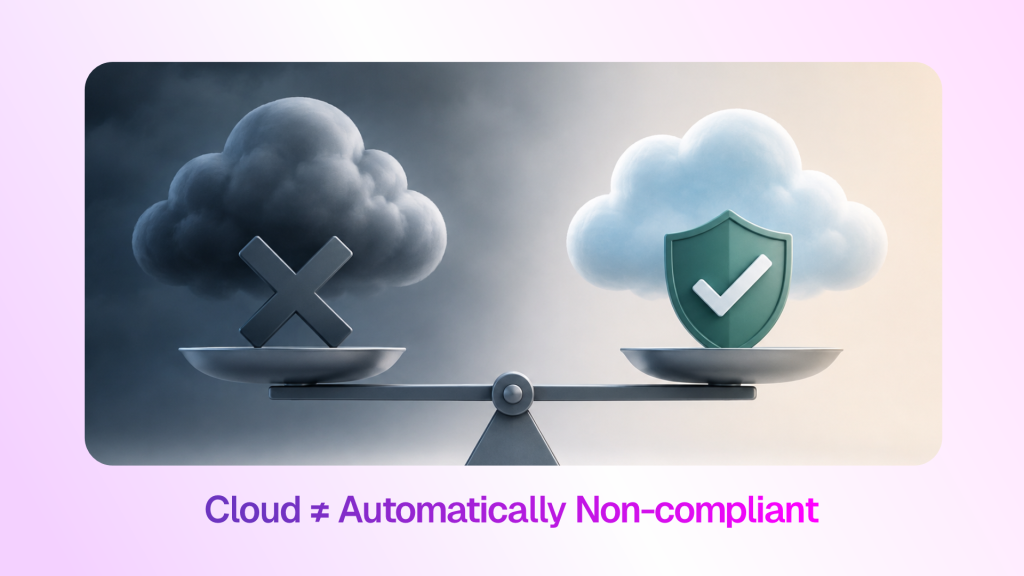
The strategic choice is therefore not simply public cloud versus on-premises. It is about creating an operating model that balances jurisdiction, control, availability, scalability, cost, portability, and regulatory assurance.
Rushed Migrations Create New Risks
A regulatory deadline creates pressure to move quickly. But speed without architectural discipline can introduce risks that are more dangerous than the original compliance exposure.
One common failure is migrating without discovering hidden dependencies. An application may appear self-contained while relying on offshore identity providers, Moving only the application and database can leave critical transaction paths dependent on systems that were never considered.
Another risk is recreating cloud architecture on unsuitable infrastructure. Cloud applications often depend on managed services, automated scaling, regional redundancy, and elastic capacity. Reproducing that environment through a collection of manually managed servers can create performance problems, operational bottlenecks, and new single points of failure.
Organisations must also distinguish backup from disaster recovery. Having a copy of data does not prove that a complete business service can be restored. Recovery requires applications, databases, identities, certificates, encryption keys, configurations, networks, and operational knowledge to be recoverable together. Most importantly, compliance achieved through operational fragility is not resilience.
A Better Migration Approach
A resilient localization programme should begin with discovery, not procurement. Before selecting infrastructure, organisations need a clear view of their application and data estate. This includes databases, payment systems, APIs, identity services, encryption and key-management systems, networks, backup environments, monitoring platforms, third-party access, analytics pipelines, and disaster-recovery systems.
Each workload should then be assessed according to its regulatory scope, business criticality, availability requirements, recovery objectives, transaction volume, dependencies, and migration complexity.
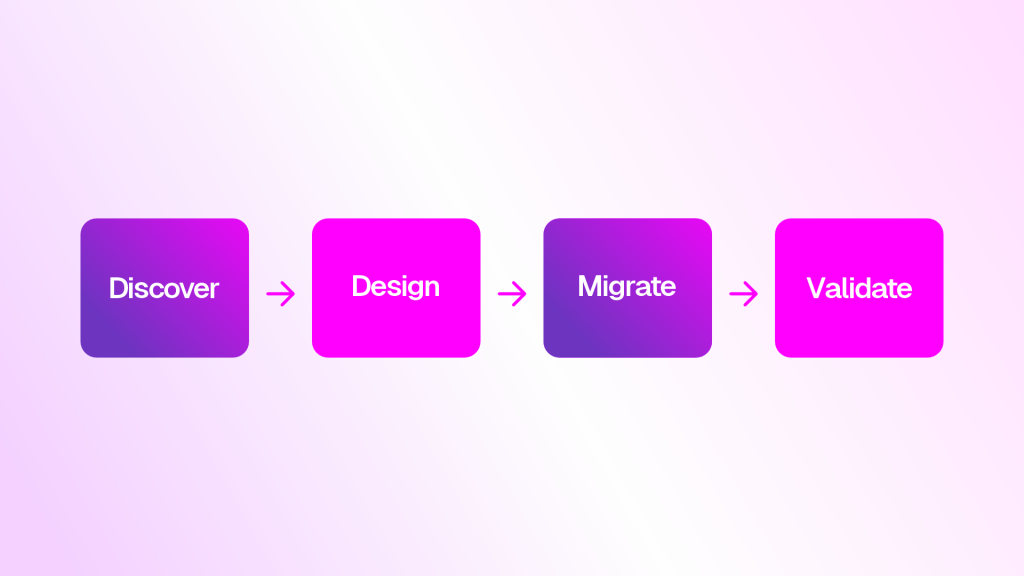
Some may be rehosted with minimal changes. Others may need to be replatformed onto more portable technologies or refactored to improve resilience and reduce dependence on proprietary services. Some workloads may be retained where they fall outside the localization scope, while obsolete systems should be retired rather than migrated simply because they already exist.
The target environment should also be built before production migration begins. It needs more than servers and storage. It should provide resilient networking, identity and privileged-access management, encryption and secrets management, centralised logging, security monitoring, automated deployment, infrastructure as code, backup, cyber-recovery, and disaster-recovery capabilities.
Designing for Near-Zero Downtime
For mission-critical systems, a single big-bang migration creates unnecessary risk. A safer approach is to build the target environment alongside the existing one, perform an initial data transfer, maintain continuous replication, validate the target, and progressively redirect traffic once performance and data integrity have been proven.
Depending on the workload, organisations can use blue-green deployments or parallel validation to limit the impact of failures. True zero downtime is difficult and should not simply be promised. CIOs need to define what the business actually requires:
How much downtime is acceptable? How much data can be lost? How quickly must the organisation recover?
Resilience Must Continue After Migration
A migration is not complete when production traffic reaches the new environment.
The organisation must prove that the platform can survive component failures, restore from backup, recover from data corruption, fail over to a secondary site, maintain security controls, and operate without depending on individual employees.
This requires deliberate testing. Disaster-recovery exercises, backup restoration, capacity testing, security simulations, failover tests, and rollback exercises should become part of ongoing operations rather than activities performed only before regulatory review.
The objective is not to create an environment where failure never occurs. It is to ensure that when failure occurs, it is contained, detected quickly, and recovered from without unacceptable business impact.
The CIO’s Long-Term Agenda
The data-localization directive changes the CIO’s role. The objective should not simply be to relocate workloads before January 2027. It should be to use the programme to improve enterprise control, resilience, and architectural independence.
That means reducing excessive dependence on individual cloud providers. It means adopting open standards and secure APIs.
A server being operational does not necessarily mean customers can complete transactions. CIOs should therefore establish service-level objectives around critical business journeys such as transaction completion, API performance, reconciliation, recovery time, and customer-impact duration.
The Strategic Opportunity
The CBN directive creates a deadline, but it also creates a rare opportunity.
Many organisations have accumulated infrastructure debt, and undocumented dependencies over time. A well-designed localization programme can become the catalyst for simplifying that environment. The organisations that benefit most will not necessarily be those that move the largest number of servers the fastest.
Revent’s Vision for Sovereign Financial Infrastructure
Data localization should not result in a retreat from innovation. It should lead to a more deliberate form of innovation, one where data sovereignty, platform engineering, cybersecurity, automation, and resilience are designed together.
The future enterprise will not be defined simply as cloud-first or on-premises-first. It will be control-first, resilience-first, automation-first, portable by design, observable by default, and recovery-tested.
The CBN’s data-localization directive is therefore more than a policy event. It is a leadership test for Nigerian technology organisations. CIOs who treat it as a server-relocation project may achieve short-term compliance but inherit long-term fragility.
Those who treat it as an enterprise resilience and sovereignty programme can use it to build the trusted digital foundation required for the next decade of growth.
Transform Your Compliance Mandate Into Operational Excellence
At Revent Technologies, we help institutions design, migrate, and operate secure digital platforms built for data sovereign. Through our specialized Cloud & DevOps Engineering Services, we turn compliance mandates into a competitive operational advantage.
Preparing your organisation for the January 1, 2027 data-localization requirements? Partner with Revent Technologies to build a sovereign, resilient architecture engineered for zero downtime, high performance, and uncompromised regulatory alignment.
Talk to an Infrastructure Expert at Revent.
Disclaimer: This article provides strategic and technology guidance and does not constitute legal or regulatory advice. Institutions should obtain advice based on their licences, data flows, contractual arrangements, and operating models.