The Work-Life Balance Conversation Nigerian Companies Are Avoiding and Paying For
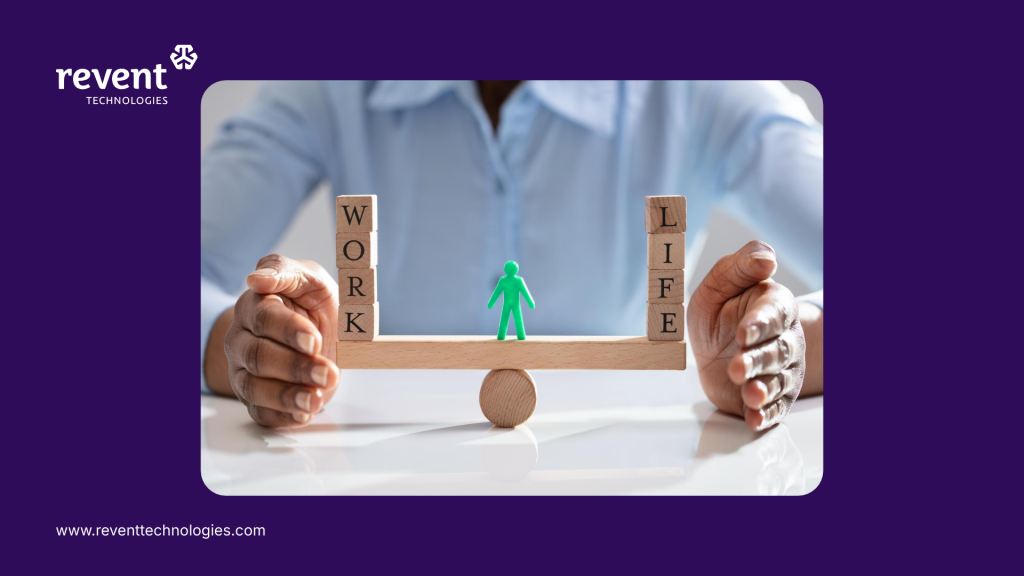
The Nigerian engineer who is working 12-hour days and considering the international remote offer is not primarily calculating hours. They are calculating output: what those 12 hours produce, under what conditions, and whether the same effort in a different environment would produce more, with more recognition, and with more time left at the end of the day.
This is the work-life balance conversation that Nigerian companies are avoiding. Not whether employees should work hard, but whether the organisation is structured in a way that makes hard work efficient and worth making.
The problem is not that Nigerian companies require hard work. It is that many of them require hard work without the management quality, the process discipline, or the organisational design that would make that hard work efficient. The 12-hour day that produces 8 hours of high-quality output is a different thing from the 12-hour day that produces 12 hours of presence and varying amounts of actual output. The Nigerian tech professional who is spending 12 hours a day in a poorly managed environment is not trading work-life balance for meaningful output. They are trading their personal time for organisational inefficiency.
And they know it.
What the Data Shows About Working Conditions in Nigerian Tech
The 2026 Nigeria Remote Job Report documents that remote work has become a defining feature of Nigeria’s tech employment landscape, with professionals increasingly choosing remote arrangements for their ability to deliver better work-life outcomes. Internationally, 71% of remote workers report better work-life balance. Nigerian remote workers who are now part of this statistic are aware of the difference. Their colleagues in local employment are aware of the difference too, through the conversations that happen in professional networks and WhatsApp groups.
The scepticism that many Nigerian founders and senior leaders hold toward “work-life balance” is understandable given where Nigerian companies came from. The ethic of hard work as a foundational value is real and has produced real outcomes. But it is being applied in a market context where the engineers and product managers the companies most need to keep have a reference point for what their working conditions could look like. And for a growing proportion of the Nigerian tech workforce, the comparison is not favourable to the local employer.
The Three Patterns That Produce Burnout Without Results
1. Meeting cultures that consume time rather than producing decisions. The organisation where the senior leadership team is in back-to-back meetings from 9am to 6pm is not running on high intensity. It is running on the appearance of high intensity. Meetings that do not produce documented decisions, that include everyone who might be relevant rather than only those essential, and that recur on weekly schedules regardless of whether there is content to justify them are consuming the time that productive work requires. The employee who spends six hours in meetings and has six hours to do the work those meetings discussed is operating in a system structured against their performance.
2. Always-on communication expectations without corresponding output clarity. The Slack culture where messages are expected to receive responses within minutes, regardless of the hour, is not a high-performance culture. It is a high-availability culture, which is a different thing. Availability is not output. The organisation that conflates them is measuring the wrong thing and creating conditions that are genuinely unsustainable for the people who take the work most seriously.
3. No protected time for deep work. The cognitive work that engineering, product design, data analysis, and strategy require cannot be done in interrupted 20-minute windows. It requires sustained concentration over 90-minute to 3-hour blocks. The Nigerian tech company whose meeting culture and constant notification environment have eliminated protected time for deep work is not getting the quality of output that deep work produces. The best engineers, who know what their output looks like when they have protected time, know when they are not getting it. And they factor this into the comparison.
The Conversation Worth Having
The work-life balance conversation worth having is not a negotiation about whether employees should work hard. It is a conversation about whether the organisation is structured in a way that makes hard work productive.
The company that has this conversation and designs its culture around productive intensity rather than performative availability will retain the people who have options. The company that avoids it will continue to lose them to environments that have figured this out and stopped confusing presence with performance.
Revent Technologies places management professionals who know the difference: who build the meeting discipline, the output accountability, and the team rhythm that produces genuine performance rather than visible effort. If your retention problem is driven by culture rather than compensation, the management hire is the intervention.
Start here: www.reventtechnologies.com/site/hire-a-developer
Research Sources
– Remote4Africa: 2026 Nigeria Remote Job Report: work-life balance as key factor in remote work adoption
– MyJobMag: Remote Work Statistics 2026: 71% of remote workers report better work-life balance
– Waldenu: Employee Retention in Nigerian SMEs: working conditions and retention strategy